
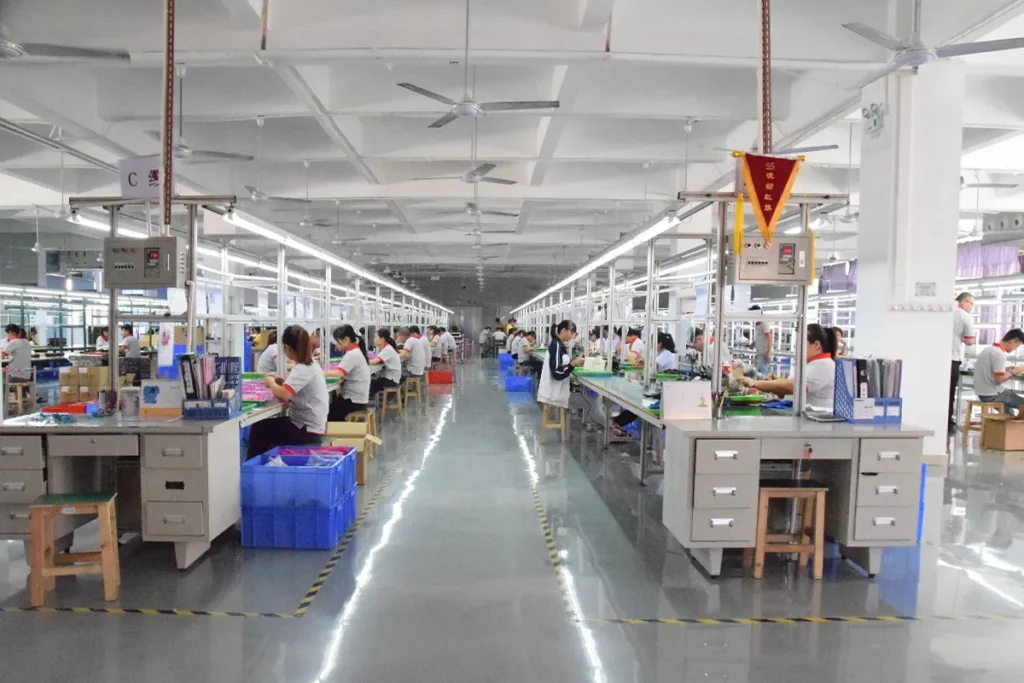
2026 Headphone Factory Audit Guide: Spot Bad Suppliers & Lock True Power
As a global sourcing manager or purchasing director, you know this truth deeply: in the 2026 audio sourcing landscape, conducting a headphone factory audit is no longer a “walk-through” with a clipboard. It is a strategic interrogation of a supplier’s resilience, ethical depth, and technical transparency.
The stakes have reached an all-time high. With the EU’s Corporate Sustainability Due Diligence Directive (CSDDD) in full effect, brand owners are now legally liable for violations occurring three or four tiers up the supply chain. Simultaneously, the global electronics market is reeling from severe chip and battery cell supply constraints driven by AI demands. To maintain margins, many low-end headphone suppliers have begun cutting corners on critical materials.
Quality costs. But in 2026, a failure or a half-hearted compromise in your audit costs more—it can lead to total brand de-platforming or catastrophic product recalls. As a buyer, you need a high-stakes blueprint to transform every headphone factory audit from a compliance hurdle into a robust protective shield.
The Identity Fraud Crisis: Stripping the Mask off “Ghost” Trading Companies
The most enduring pain point for bulk headphone buyers is the “identity masquerade.” In 2026, middleman trading companies have evolved into high-tech “Ghost Factories.” They use AR-enhanced virtual tours and AI-generated maintenance logs to hide the fact that they own zero machinery and employ zero engineers.
Relying blindly on a Business License is a relic of simpler times; a license verifies only a legal shell, not a manufacturing heartbeat. If you do not want your project to fall into a “blind box” model of stacked costs, communication lag, and a fatal loss of quality control, you must enforce three strict rules when performing a headphone factory audit:
1. The “VAT Invoice” Litmus Test
A genuine headphone manufacturer must be able to issue 13% export tax refund invoices directly under their registered manufacturing name. Trading companies often make excuses or demand payments through offshore Hong Kong accounts. This is your first red flag. Inconsistent invoicing entities signify a complete loss of legal recourse if the batch quality fails later.
2. Physical Asset Ownership vs. “Cooperative” Sites
Many traders take clients to a “partner factory” where the workshop laborers do not even recognize the person leading the tour. During an on-site audit, you must demand to see the original purchase invoices for core heavy equipment, such as SMT (Surface Mount Technology) lines and anechoic chambers. No assets mean zero control over production scheduling or quality stability.
3. Vertical Focus vs. The “General Store”
Advanced audio manufacturing requires extreme electroacoustic verticality. A supplier whose catalog includes TWS earbuds alongside kitchen gadgets and pet supplies is a generalist trader, not an expert manufacturer. True technical depth is required to solve complex radio frequency (RF) interference and electroacoustic matching issues in crowded urban environments.
The 2026 “Red Flag” Protocol: Spotting Invisible Failure
A professional headphone factory audit must focus on what the supplier does not show you. Use these specific indicators to identify high-risk vendors before signing a contract.
1. The Technology Mismatch
If a supplier claims to develop high-end Hybrid ANC (Active Noise Cancellation) headphones but lacks an Anechoic Chamber or an Audio Precision (AP) analyzer in their R&D or QA department, they are misrepresenting their capabilities.
Industry Sourcing Consensus: “True ANC production requires phase calibration and gain adjustment for every individual microphone at the End-of-Line (EOL) stage. Without these precision tools, they are merely assembling ‘screwdriver’ parts with zero control over sound signature or cancellation depth.” — Sourced from HONSENN’s Internal Engineering Audit standards.
2. ISO 9001 Scope Deception
Check the Scope of Certification on their ISO 9001 document. Trading companies often hold certificates that cover “Sales and Distribution” but not “Design and Manufacture.” Always verify the certificate number directly in official databases like the SGS Certified Client Directory or TÜV SÜD Certificate Explorer. If the address on the certificate doesn’t match the factory gate, the audit is over.
3. The Power Consumption Reality Check
Capacity fraud is rampant. A factory claiming a monthly capacity of 500,000 units while operahttps://www.sgs.com/en/certified-clients-and-productsting only two sparse assembly lines is physically impossible. Demand to see the industrial electricity bills for the last quarter. Manufacturing energy consumption is a physical constant; it is the one metric a shell company cannot fake.
Buyer Blueprint: Effectively Applying the 5-Pillar Audit Framework
To build a resilient supply chain, your audit checklist must adapt to the 2026 market landscape:
-
Pillar 1: QMS and Risk-Based Thinking Review their Management Review Report. Verify if they have established a dual-sourcing strategy (backup suppliers) for critical wirless chipsets and flash memory. If their risk management relies on static SWOT analyses, their resilience is dangerously low.
-
Pillar 2: Technical Competence and Electroacoustics Verify if the factory utilizes AI-driven Perceptual Rub & Buzz algorithms for 100% online acoustic testing. This catches tiny rattles caused by glue overflow right on the line, saving your brand from expensive overseas warranty claims.
-
Pillar 3: Social Compliance (BSCI/SA8000) A “C” rating or lower on a BSCI report without an active corrective action plan is a red flag. Your goods will struggle to enter major global retail channels like Walmart or MediaMarkt. Choosing a fully certified factory is non-negotiable.
-
Pillar 4: Supply Chain Resilience and Battery Security Lithium-ion batteries are the single greatest physical risk in wireless headphones. Ensure battery suppliers hold UL 1642 certification, and verify that the factory’s IQC (Incoming Quality Control) conducts 100% internal resistance and capacity grading tests.
-
Pillar 5: Sustainability and Environmental Footprint Strictly review RoHS and REACH compliance certifications. This is your last line of defense against having your container seized or destroyed at customs for environmental violations.
The HONSENN Advantage: Solving the Buyer’s Sourcing Pain Points
When filtering partners through a rigorous procurement lens, HONSENN (Hong Sen Chen Xin)—a genuine factory entity with 19 years of professional audio manufacturing heritage—perfectly aligns with a buyer’s need for transparency, strict quality, and deep vertical expertise.
-
Shenzhen R&D + Dongguan Manufacturing: HONSENN perfectly balances cutting-edge engineering with scaled production. Our Product R&D Center is based in Shenzhen, directly tapping into the world’s top audio tech and chipset ecosystems, while our Mass Production Base is anchored in Dongguan. This vertical integration shortens the NPI (New Product Introduction) cycle by up to 30%, which is critical for time-sensitive private label projects.
-
Zero ‘Screwdriver Assembly’: Heavy Investment in Electroacoustic Equipment: At HONSENN, asset transparency is fully open to buyers. Our facility boasts highly automated assembly lines backed by professional-grade Anechoic Chambers, Audio Precision (AP) analyzers, and high-precision RF testing environments. From initial acoustic structural design to 100% EOL phase calibration and AI Rub & Buzz screening, we resolve quality concerns with hard engineering proof.
-
Flawless Compliance Assets & IP Firewalls: Addressing the compliance and intellectual property anxieties of global brands, HONSENN is fully certified across ISO 9001:2015/2026, BSCI, RoHS, CE, and FCC standards. Your OEM/ODM schematics, customized acoustic tunings, and proprietary molds are protected by strict legal and physical double-isolation barriers.
Strategic Category Management: Driving New Growth for Your Brand
-
Multi-Scenario Audio Evolution: Global sourcing channels are shifting toward full-scenario, multi-device portfolios. Partnering with a manufacturer capable of producing both business-class ANC over-ear headphones and sports-optimized open-ear audio allows you to eliminate fragmented, multi-vendor management costs.
-
Capturing Market Trends (OWS – Open-Ear Earbuds): Currently, OWS (Open-Ear) earbuds and bone conduction technologies are experiencing explosive market growth. Partnering with an original manufacturer like HONSENN—who consistently innovates in 13mm large-diameter dynamic drivers, spatial audio, and adaptive acoustic algorithms—empowers your brand to bypass low-margin commodity traps.
Conclusion: Secure Your Supply Chain Wall
In the 2026 global audio market, a supply chain audit is a game of survival. By stripping away trading company disguises, enforcing the 5-Pillar framework, and demanding verified asset transparency, sourcing directors can transform their supply chain into an aggressive competitive advantage.
Choosing a partner like HONSENN—which possesses both the “hard power” of dual-city R&D/manufacturing and the “soft power” of absolute compliance transparency—is your most effective risk-mitigation strategy.
Ready to verify our manufacturing capabilities?
[Contact the HONSENN B2B Team / Apply to Become a Global Partner] today to request our traceable factory profile and transparency audit reports.