
How to Partner with a High-Precision ANC Headphone Manufacturer
Launching a high-performance audio product line requires a reliable and experienced manufacturing partner. Therefore, choosing a qualified Active Noise Cancelling headphone OEM factory is the most critical strategic decision for premium audio brands, product managers, and procurement managers. An Active Noise Cancelling headset is a highly complex electro-acoustic system. Consequently, mechanical housing design, physical cavity volume, MEMS microphone placement, and Digital Signal Processing algorithms must achieve perfect equilibrium.
1. How an Acoustic OEM Partner Solves R&D Challenges
Developing a market-ready noise cancelling headphone involves far more than snapping an off-the-shelf chipset into a generic plastic enclosure. Subpar acoustic engineering creates severe user experience issues. For instance, listeners often complain about uncomfortable ear pressure, excessive electronic background hiss, and noticeable audio distortion when noise reduction is active.
Fortunately, an established Active Noise Cancelling headphone OEM factory addresses these acoustic engineering challenges early in the research and development phase:
-
Hybrid ANC Architecture Optimization: Engineers combine exterior Feedforward microphones with internal Feedback microphones. Consequently, this dual-microphone system delivers broad-frequency ambient noise attenuation up to -43dB.
-
Acoustic Venting and Pressure Relief: R&D specialists calculate precise pressure-relief ports within the ear cup structure. As a result, this design balances static pressure while preserving natural low-end bass performance.
-
DSP Dynamic EQ Compensation: The engineering team implements dynamic real-time equalization algorithms. Therefore, Hi-Fi audio dynamics remain natural and punchy whether ANC mode is switched on or off.
-
Multiphysics Acoustic Simulation: Design teams utilize advanced software like COMSOL Acoustics Simulation. Consequently, they can evaluate internal air velocity and driver diaphragm behavior long before physical steel tooling begins.
2. R&D and Manufacturing Standards Comparison
Understanding the structural gap between a generic electronics workshop and a specialized manufacturing partner helps audio brands protect their investment and ensure long-term product quality:
| Aspect | Basic Electronics Assembly Workshop | Advanced Audio Manufacturing Partner |
|---|---|---|
| R&D Tools | Basic frequency counters | COMSOL Simulation & Audio Precision Analyzers |
| Noise Reduction Depth | Single Feedforward mic () | Hybrid ANC System ( depth) |
| Acoustic Testing | Spot checking after assembly | G.R.A.S. Anechoic Chambers & 100% in-line testing |
| Global Compliance | Virgin ABS plastics only | amfori BSCI Audited & Bluetooth SIG QDID Certified |
3. The 4-Stage Manufacturing SOP of a Professional Factory
A dedicated Active Noise Cancelling headphone OEM factory maintains strict cleanroom protocols, electrostatic protection, and automated testing throughout assembly:
-
High-Precision SMT Assembly: Automated Surface Mount Technology lines assemble multi-layer mainboards under strict anti-static conditions. Furthermore, optical inspection systems verify Bluetooth SoCs and MEMS microphone alignment.
-
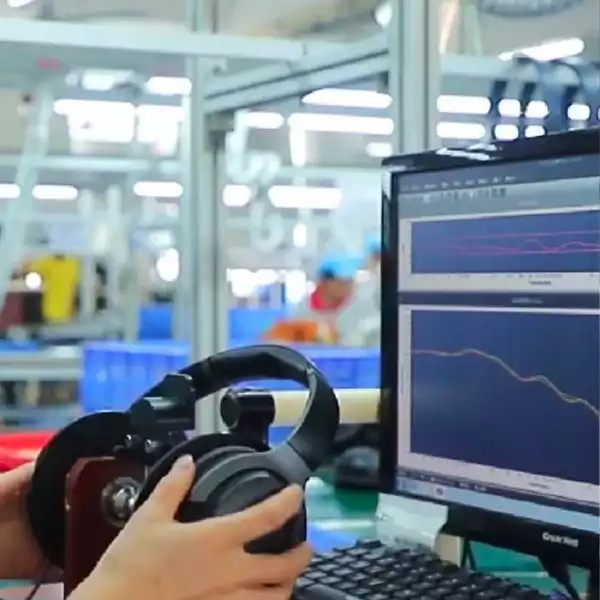
Anechoic Chamber Calibration: Acoustic engineers calibrate master units inside an in-house anechoic chamber using measurement systems from Audio Precision. Target frequency response curves, THD (), and attenuation limits are locked in.
-
In-Line Electro-Acoustic Testing: Drivers are impedance-matched within . In addition, every assembled unit passes automated test fixtures to verify active noise cancellation curve compliance.
-
Reliability Stress Testing: Production units undergo extreme environmental testing, including high-temperature cycling, drop trials, headband tension fatigue tests, and battery load safety evaluations.
4. Frequently Asked Questions
Q1: Where are the top ANC headset facilities located in China?
A: The primary hub operates under a Shenzhen R&D and Dongguan Mass Manufacturing model. Shenzhen hosts top acoustic algorithms, firmware developers, and Bluetooth SoC engineers, while nearby Dongguan provides scalable, ISO-certified injection molding, SMT lines, and anechoic testing facilities.
Q2: Why do some ANC headphones lose bass when Active Noise Cancellation is turned ON?
A: Bass loss occurs when a facility uses generic plastic enclosures without dynamic DSP compensation. A professional Active Noise Cancelling headphone OEM factory applies real-time DSP EQ compensation. Therefore, it maintains consistent tonal balance across all playback modes.
Q3: What is the typical development timeline for a custom mold project?
A: Developing a custom headset typically takes 90 to 120 days. This timeline includes 3D CAD modeling and COMSOL simulation (20 days), steel tooling fabrication (40 days), acoustic tuning (20 days), and trial production assembly (25 days).
Q4: How do audio brands ensure Bluetooth SIG compliance?
A: Brands must ensure their supplier holds valid Qualified Design IDs directly registered with the Bluetooth Special Interest Group. In addition, a compliant supplier provides full test reports for US FCC Certification and European ECHA REACH Regulations.
Conclusion: Partnering with a Certified Acoustic Specialist
Launching a successful product line requires an experienced manufacturing partner. By collaborating with a certified Active Noise Cancelling headphone OEM factory that invests in advanced acoustic R&D, anechoic testing, and strict quality control, your brand can shorten development cycles and deliver exceptional audio experiences to global customers.
Ready to Start Your Custom Audio Project?
Are you looking for a BSCI-audited ANC manufacturing facility equipped with advanced acoustic labs?
Contact our engineering team today to request physical samples, review custom tooling options, or submit an RFQ for your upcoming audio project.