
The Consumer BCI Revolution: How EEG Smart Headphones Form a New Era in Personal Wellness
Today, EEG Smart Headphones are undergoing a massive global shift. They are moving fast from laboratory equipment into mass-market consumer AI devices. As a leading EEG earbud manufacturer specializing in advanced acoustics, Honsenn is pioneering this neuro-wearable wave.
Indeed, headphones serve as natural biological carriers. Whether featuring In-Ear or Open-Ear (OWS) designs, they fit perfectly against human skin. Therefore, this seamless contact transforms the ear canal into a biological goldmine for capturing brainwaves. In this booming era of Consumer BCI, brands must act quickly. Partnering with a mature manufacturing expert has become the ultimate way to capture the multi-billion dollar Mental Wellness Wearables market.
1. The Evolutionary Journey: Shaking Off Laboratory Shackles
For decades, electroencephalography (EEG) was confined strictly to clinical labs. Capturing brainwaves required users to wear bulky, cable-laden caps. Furthermore, users had to apply thick, messy conductive gel to their scalps.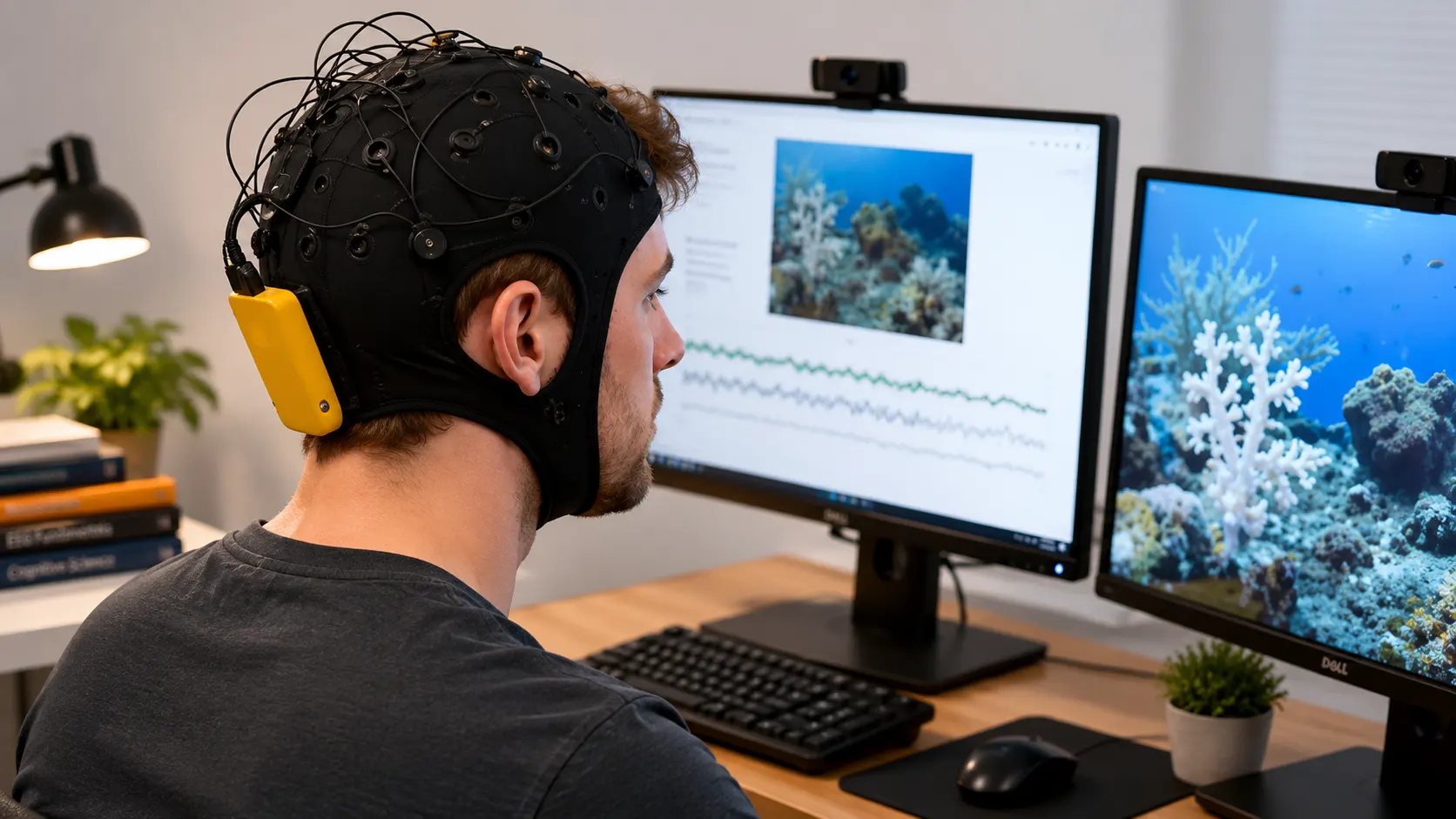
However, this barrier began to collapse around 2020. Micro-sensors and wireless tech matured rapidly during this period. As a result, early brain-computer interface pioneers like Emotiv introduced streamlined, lightweight headbands. These devices successfully targeted the consumer education and light entertainment sectors.
Subsequently, the true “headphone-form consumerization” wave reached a tipping point between 2024 and 2026:
-
First, Neurable collaborated with premium audio giants to launch AI-driven over-ear headsets. These smart devices featured advanced frontal lobe EEG monitoring and quickly sparked immense interest among global tech enthusiasts.
-
Second, brain health tech innovator NextSense rolled out true wireless AI earbuds with integrated EEG sensors. This landmark release marked the official entry of brainwave technology into mainstream TWS form factors.
-
Finally, by 2026, front-end manufacturing processes achieved a historic breakthrough. Specifically, the total weight of a single-ear consumer brainwave earbud dropped below 6 grams. This lightweight design triggered long queues at major tech showcases like CES. Consequently, the maturity of In-Ear EEG micro-engineering has forced a complete upgrade across the acoustic supply chain. It also places unprecedented demands on any premium EEG earbud manufacturer regarding precision production.
2. Core Technical Frameworks of a Premium EEG Earbud Manufacturer
From a hardware standpoint, consumer-grade EEG headphones delivered by a top-tier EEG earbud manufacturer have branched into two distinct product lines:
Route A: In-Ear / Open-Ear Solutions — Microscopic “Passive EEG Monitoring”
This specific form factor shifts signal acquisition down to the ear canal area. By embedding miniature bio-sensors into the earbud casing, In-Ear EEG technology captures the cortex’s faint electrical fluctuations like $\alpha$ waves. Then, it translates them into digital wellness data.
-
Primary Use Cases: High-precision Sleep Staging & Sleep Tech optimization, real-time mental stress monitoring, and focus analytics.
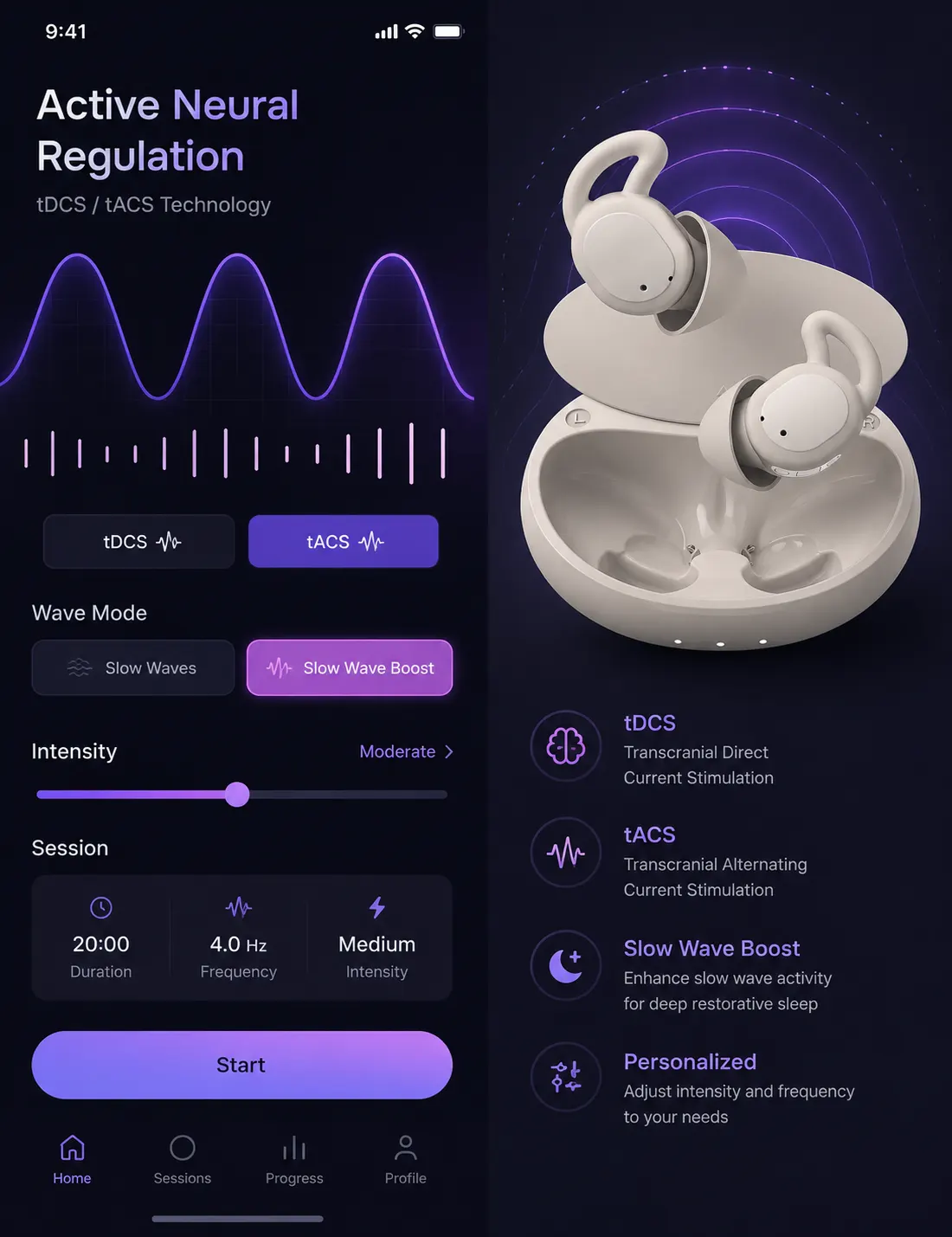
Route B: Over-Ear Headsets — “Active Neuromodulation” (tDCS / tACS)
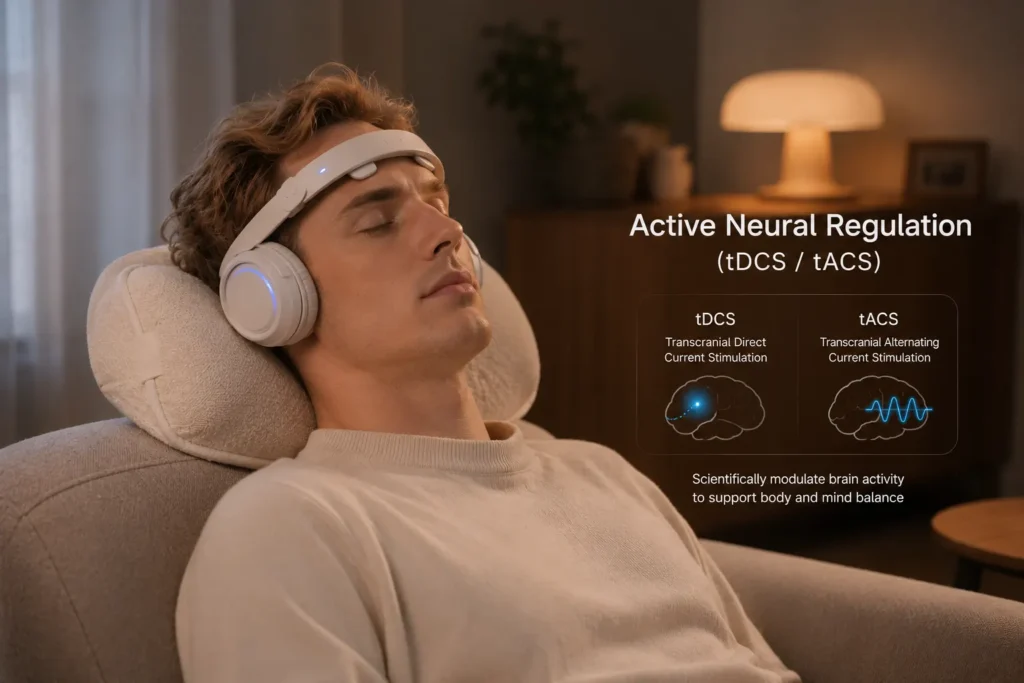
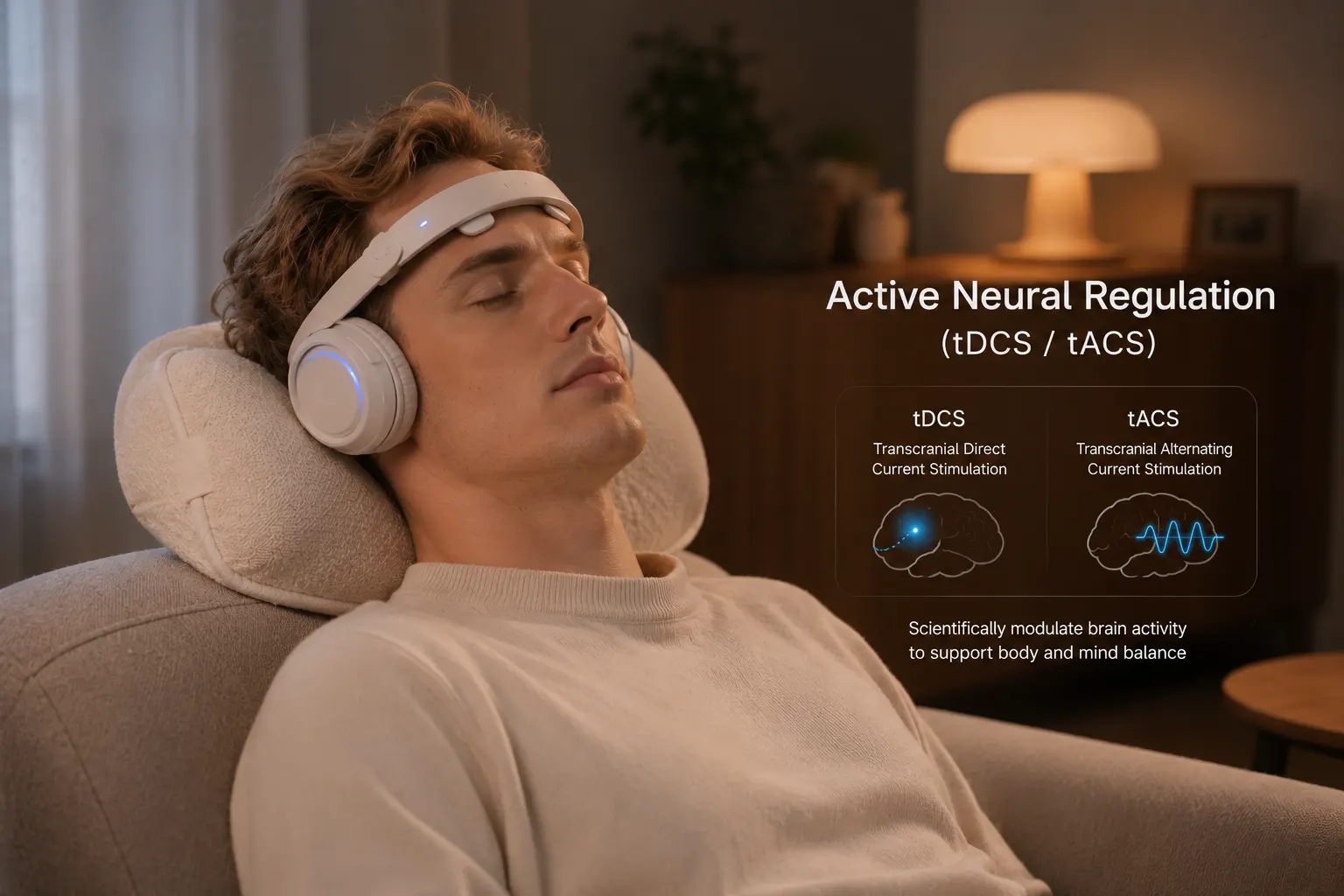
In contrast, this route represents a highly disruptive, active approach in the consumer market. A tDCS Headset does more than just passively log data. Instead, it utilizes safe, ultra-low micro-currents to actively stimulate targeted cortical regions. Therefore, it functions effectively as a next-generation Neuromodulation Headset.
-
Primary Use Cases: Accelerating Brain Fatigue Recovery after intensive work and driving immediate Focus & Flow State Optimization.
⚠️ Proactive Defense for Acute Stress and Compliance Boundaries:
The fusion of passive Route A monitoring and active Route B stimulation provides an intuitive shield for proactive acute stress relief. By tracking sudden spikes in the nervous system under high pressure, the headset can flag a stress spike early. Then, it initiates targeted micro-current stimulation to calm hyperactive neurons.
However, brand operators must clearly establish a strict Non-Medical Positioning. As a responsible EEG earbud manufacturer, we embed rigorous Regulatory Compliance Isolation into the underlying hardware design. Consequently, the product is framed as a daily “neurological barometer” for lifestyle optimization, completely separated from clinical diagnosis.
3. Ecosystem Synergy: B2B Integration & Open SDK Networks
As brainwave acoustic technology ripens, it is rapidly transitioning into a high-efficiency productivity tool. Moreover, it is integrating effortlessly into the global B2B and corporate wellness ecosystems.
-
Open-SDK Ecosystem Expansion: Global BCI hardware giants are now distributing earbud-style reference designs. In addition, they are opening their software development kits (SDKs) to global app developers and AI teams.
-
Asset-Light Operational Models: This “hardware reference + open platform” setup delivers massive benefits. For instance, consumer lifestyle brands do not need a team of neuroscientists to build software from scratch. Instead, they can deploy an open SDK to pair our high-precision hardware with existing mindfulness apps. Ultimately, this approach radically lowers the time-to-market for a new product line.
4. Market Trajectory: Closed-Loop AI & The “No FDA Approval” Business Model
Looking ahead, consumer headsets manufactured by an agile EEG earbud manufacturer are following a clear trajectory. They combine advanced automation with strategic de-regulation, which is the golden formula for commercial profitability:
-
Evolving from Monolithic Tracking to “AI-Driven Closed-Loop Audio-Stimulation”:
The future centers heavily on edge-AI feedback loops. When the embedded algorithm detects cognitive fatigue, the headset triggers a Closed-loop Audio-Stimulation routine. Instantly, the AI synthesizes functional acoustic masking like pink noise. Concurrently, it adjusts the Active Noise Cancellation (ANC) depth to block environmental triggers. It also safely activates over-ear micro-current pacing to guide the brain back to a calm state.
-
Decoupling from Clinical Labels for Rapid Consumerization:
The dominant volume play for global consumer electronics brands lies in cutting ties with clinical certifications. Brands should focus entirely on daily lifestyle wellness.
The Regulatory Loophole: Brands can explicitly state that “this product is intended strictly for personal wellness management.” As a result, the device operates under a Non-FDA Regulated framework requiring No FDA Approval Required. This smart strategy allows the product to bypass multi-year medical clearance cycles. Therefore, it ensures Rapid Consumer Market Iteration and enables brands to launch and scale a mass-production consumer product in just months.
5. Overcoming the Top 3 Mass-Production Manufacturing Hurdles
To translate these complex neurological concepts into mass-produced hardware, an advanced EEG earbud manufacturer must conquer deep engineering bottlenecks:
-
Flexible Dry Electrodes Manufacturing: Medical-grade wet goggles requiring conductive gel are a non-starter for consumer use. Therefore, factories must master the production of Flexible Dry Electrodes. These materials must deliver exceptional electrical conductivity. Meanwhile, they must remain sweat-proof, skin-friendly, and completely hypoallergenic over long wear cycles.
-
Edge-AI Artifact Rejection Algorithms: Brainwave signals around the ear canal are incredibly faint. For this reason, the hardware architecture must run lightweight Edge-AI Artifact Rejection models directly on the DSP to isolate the signal. It must execute high-precision Biosignal Decoupling in real time to filter out muscle noise caused by blinking or speaking.
-
Adaptive Safe Constant-Current Circuitry: Unlike traditional headphones, a neuromodulation headset requires adaptive constant-current power modules. As a user sweats, their skin impedance fluctuates wildly. Consequently, the internal circuitry must adapt instantly, locking the output below a precise 2mA threshold to eliminate the risk of skin irritation.
💡 Honsenn’s Advanced Manufacturing & R&D Capabilities in the BCI Sector
As a premier EEG earbud manufacturer with decades of expertise in high-end acoustic engineering, Honsenn (Honsenn Technology) utilizes its dual-engine ecosystem to build mass-production pipelines for AI-powered brainwave wearables. We run our product development based in Shenzhen and mass production manufacturing based in Dongguan.
We provide turn-key Private Label BCI Solutions for global brands, engineered around three pillars of manufacturing excellence:
-
Heterogeneous Hardware Integration & Biosignal Decoupling: Honsenn’s structural engineers excel at embedding micro-biosensors into ultra-compact TWS and OWS acoustic cavities to achieve pristine Biosignal Decoupling. Simultaneously, our over-ear headsets utilize proprietary, high-safety constant-current circuits. This ensures rock-solid hardware stability across both signal capture and stimulation pathways. Furthermore, our designs are fully compliant with the latest Bluetooth SIG Core Specifications for ultra-low latency wireless data transmission.
-
Edge-AI Processing & Audio-Stimulation Synchronization: Utilizing high-efficiency, low-power DSP chipsets, Honsenn successfully deploys Edge-AI Artifact Rejection algorithms directly on-device. Combined with our custom neuro-pacing algorithms, the headset monitors brainwave stages in real time to trigger automated Closed-loop Audio-Stimulation routines.
-
100% PCR Eco-Friendly Manufacturing for Global Compliance: Matching global ESG compliance trends and aligning with the Science Based Targets initiative (SBTi) carbon reduction pathways, Honsenn incorporates 100% PCR Eco-friendly Manufacturing. We do this by utilizing post-consumer recycled aluminum alloys and modular, eco-friendly structural layouts.
Furthermore, our regulatory advisory team assists global clients in defining product features to ensure clean Regulatory Compliance Isolation. We help you position your product clearly under the No FDA Approval Required lifestyle bracket. Through our flexible, robust private-label options, Honsenn protects your brand from regulatory friction. Ultimately, we allow stable, high-performance brainwave headsets to hit global shelves at maximum speed.
-
NCBI Comprehensive tDCS/tACS Technical Guide – The definitive clinical and scientific repository tracking the mechanisms, safety metrics, and cortical stimulation protocols of transcutaneous electrical nerve stimulation.
-
U.S. FDA Medical Device Classification & Wellness Guidance – Official regulatory compliance database outlining general controls, 510(k) clearance rules, and specific market exemptions for general wellness neuro-devices.
-
Neurable BCI OEM Partner Program – The official hardware integration and open software framework reference library behind the groundbreaking MW75 Neuro smart headphones.
-
NextSense Smartbuds Neuroscience Portal – Technical deep-dive and clinical evidence regarding In-Ear flexible dry sensors, ear-EEG sleep staging, and active auditory stimulation.
-
Emotiv In-Ear EEG Research & Open SDK – Core developer gateway for accessing multi-channel digital brainwave data, artifact rejection APIs, and consumer neuro-feedback applications.
-
Science Based Targets initiative (SBTi) – The absolute global reference for setting, tracking, and auditing carbon-reduction pathways and green electronic manufacturing goals.
-
Bluetooth SIG Compliance Portal – Essential gateway for checking international wireless trademark licensing, core profile specifications, and enforcing intellectual property rights.
-
HKTDC Hong Kong Electronics Fair – Asia’s ultimate global electronics sourcing
-